Cast iron statue of Jo ã o Cidade

Cast iron statue of Jo ã o Cidade

Jo ã o Sidade devoted all his energy to caring for the poor and sick as an adult. Jo ã o Sidade, contrary to all the customs of his time, established two hospitals where patients received humane treatment. According to today's nursing standards, these hospitals are considered modern hospitals, dedicated not only to nursing but also to treatment. They have doctors, pharmacists, nurses, and priests, and patients are divided by disease, with each person assigned a bed. Several of his companions joined his ranks, thus forming the founding core of the Hospital Knights, which was first approved in 1572.
Bronze Statue of Korsabad's Bronze Lion from the Neo Assyrian Period

Bronze Statue of Korsabad's Bronze Lion from the Neo Assyrian Period

This artifact is exhibited in the Oriental Antiques Department of the Louvre Museum in France. The statue is made of bronze. It is a lion statue in a lying position, with its mouth open to display its teeth. The lion's fur and facial details are carefully carved, displaying its vivid and realistic appearance. There is a circular handle above the statue, which may be used to carry or hang this item. The place where the statue was made was Korsabad, an important city in ancient Assyria located in northern Iraq today. The Neo Assyrian period was an important stage in Assyrian history, during which the Assyrian Empire reached its maximum territory.
Iron Buddha Statue of Shakyamuni during the Goryeo Dynasty in Korea

Iron Buddha Statue of Shakyamuni during the Goryeo Dynasty in Korea

This artifact is a cast iron Buddha statue from the Goryeo Dynasty in Korea. It is now housed in the British Museum in London. Its production date is from 918 AD to 1392 AD 1234. This Buddha statue is made of cast iron. The Buddha statue was discovered at a temple site in Hasachangli, Gwangju, buried to the waist. Many features are similar to the main Buddha statue in Shiku Temple, such as the outer robe covering only one shoulder, fan-shaped folds in front of the crossed legs, and a right hand lowered towards the ground. This statue was made in the early Goryeo period of the 10th century.
The marble statue of the Byzantine Empire in ancient Rome, known as the "Marble Maiden Statue"

The marble statue of the Byzantine Empire in ancient Rome, known as the "Marble Maiden Statue"

This artifact is a small Eastern Roman marble statue depicting a young girl. Its production date is around 525 BC to 500 BC, and the statue is made of marble. The posture and attire of this young girl statue are the same as the famous Kore statue found in the Acropolis of Athens. Her left leg moved slightly forward, and her left hand grabbed her thin linen jacket, pulling it tightly over her leg; The right hand may have once held an offering. Her short cloak slanted over her right shoulder and then hung down from her left arm, forming vertical, stacked folds. The surface of the statue becomes vivid due to the variations in clothing layers and textures.
Fragment of a statue from the Gallic Roman period titled 'The God of Ophigny'

Fragment of a statue from the Gallic Roman period titled 'The God of Ophigny'

This is a fragment of a limestone statue, known as the god of Ophiene, with a pig image on it and a twisted necklace around its neck. The fragments were made during the 1st century BC, Roman Empire period, and Gaul Roman period (58 BC -5th century AD). This fragment was discovered in Ophiene. The fragments are made of limestone. The dimensions of the fragments are: height of 25.8 centimeters, width of 10.5 centimeters, and depth of 7.5 centimeters. The fragments are now collected at the National Archaeological Museum in London.
Honduras' stone monument 'Chronometer Stele of Copan Square'

Honduras' stone monument 'Chronometer Stele of Copan Square'

This statue is a replica of a stone monument in Copan Plaza, Honduras. The image of the statue is Vasacarahorn Ubaa Cavell. The statue is now housed in the British Museum in London. The original stone tablet was made in 730 AD. Archaeological investigations have shown that wooden pillars and stone tablets may have been used to measure time and perform related rituals in the north of the main square of Copan Archaeological Park. The shadow of this stone tablet can be used as a marker for different dates of the year, such as to, to, and from the point of direct sunlight, as well as for the size and direction of its projection at different times of the day. The residents of Copan use it to accurately track tropical years.
Bronze statue of a praying woman from the Hellenistic period in Etruria

Bronze statue of a praying woman from the Hellenistic period in Etruria

This statue was made in the 2nd century BC, named "Bronze Prayer of Young Women Statue", belonging to the Hellenistic period of Etruria in Italy. The statue is the image of a young woman, possibly a priestess, with a height of 95 centimeters. The surface decoration of the statue is rich, including fine carving details on hair, jewelry, sewn seams, decorative edges, and shawl folds. Her shoes have exquisite shoelaces and floral decorations, which are typical Etruscan style. The left foot of the statue is a modern restoration. The statue is currently on display at the British Museum in London.
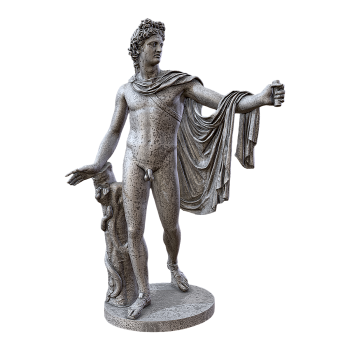
The marble statue of Apollo from the Hellenistic period of ancient Rome

The marble statue of Apollo from the Hellenistic period of ancient Rome

This marble statue is Apollo, holding a qin and quiver in his hand. He was naked except for the cloak around his waist. The right arm that was originally raised, as well as the left wrist and hand, are now missing. This statue is a work from the Hellenistic period of Rome, made in the 2nd century AD. This statue was excavated by an archaeological team led by Sir Robert Murdoch Smith and Edwin A. Borcher at the Temple of Apollo (Cyrene) in Libya. Now, this statue is housed in the British Museum in London. The height of the statue is 2.28 meters. This statue is a Roman replica of the original Greek work dating back to 200-150 BC.
The igneous rock statue of Yoga Buddha, a cultural relic from the Chola period in India

The igneous rock statue of Yoga Buddha, a cultural relic from the Chola period in India

Yoga Buddha is a very important deity in Indian history, and his story and image occupy a significant position in Indian yoga culture. Archaeologists have discovered a large number of stone sculptures and pottery seals in the Harappan and Mohenjodaro cultures of the Indus Valley civilization, featuring figures in yoga and meditation postures. There are many cross legged (described as yoga sitting posture) human figures on the Harappa seal, and the statues are now collected at the Minneapolis Museum of Art.
The clay statue of the Virgin and Child from the Capetian dynasty in France

The clay statue of the Virgin and Child from the Capetian dynasty in France

The name of this statue is the Virgin and Child (Vierge à l'Enfant). It was made in the 14th century AD, between 1300 and 1400 AD. This cultural relic was made in France. The statue is made of clay painted with golden colors. Its dimensions are: 93 centimeters high, 27.8 centimeters wide, and 17.5 centimeters deep. This statue is currently housed in the Cluny Medieval National Museum in France.
Bronze statue from the Sultanate of Delhi, India, depicting the Buddha's achievement without impurities

Bronze statue from the Sultanate of Delhi, India, depicting the Buddha's achievement without impurities

This statue, named the Pure Accomplishment Buddha, is one of the Five Wisdom Tathagatas in Tibetan Buddhism. It is related to the achievements of the Buddhist path and the destruction of poison. His name means' pure achievement '. His spouse is Tara, meaning the one who liberates, and his mount is Garuda. He belongs to the business family, whose family emblem is the Double Diamond Rod. This statue is made of copper and is currently housed in the Minneapolis Museum of Art in the United States. It was made in the 13th century AD, between 1200 and 1300 AD. This statue is a representative work of Tibetan Buddhist art, showcasing the artistic style and techniques of that period.
The marble statue "Half body Statue of a Lady" created by Karl Schl ü tte

The marble statue "Half body Statue of a Lady" created by Karl Schl ü tte

Carl Schl ü ter (1846-1884) was a German sculptor of the 19th century. His works are mainly concrete, and he excels in portrait sculpture, especially on female themes. This is a classical bust depicting a young woman. The head of this statue tilts slightly to the right. The base of the bust is a contoured base. The back of the bust bears the author's signature and the year of creation of the work: "C. Schl ü ter. 1880". This statue is now on display at the Czernov Museum in Poland.
The marble statue of Roman women from the ancient Roman Empire period, known as the "Roman Female Bust"

The marble statue of Roman women from the ancient Roman Empire period, known as the "Roman Female Bust"

This statue is currently housed in the National Archaeological Museum of Umbria, located in San Domenico, Italy.
The basalt statue "Olmec Giant Stone Head" from the heyday of the Olmec civilization

The basalt statue "Olmec Giant Stone Head" from the heyday of the Olmec civilization

This is a basalt human head sculpture from the Olmec civilization, carved from large basalt boulders and currently housed in the National Museum of Anthropology in Mexico. The height of these avatars ranges from 1.17 meters to 3.4 meters, dating back to at least 900 BC, and is a prominent feature of the ancient Mesoamerican Olmec civilization. These huge sculptures only depict the head, possibly because it is widely believed in Central American culture that the head contains an individual's emotions, experiences, and soul. Each avatar has unique facial features and may therefore be seen as a portrait of the actual ruler.
Bronze elephant statue, a folk handicraft in Uttar Pradesh, India

Bronze elephant statue, a folk handicraft in Uttar Pradesh, India

In India, elephants play an important role in both art and religion. In traditional Indian art, elephants are often used as themes and carved into various forms of statues, including deities, decorations, and memorabilia. In Hinduism, elephants are regarded as auspicious symbols, and the elephant headed god Ganesh is one of the important deities in Hinduism. In the northern region of India, folk people are skilled in using various materials such as wood, stone, metal, etc. to create animal statues, especially elephant statues.
The marble statue of the 18th century French castle of Marley, titled 'The Horse Trapped by the Horseman'

The marble statue of the 18th century French castle of Marley, titled 'The Horse Trapped by the Horseman'

The Horse Trapped by the Horseman, also known as the Malima, depicts a galloping horse and a horseman pulling the horse. These sculptures are made of Carrara marble and were created by sculptor Guillaume Cousteau between 1743 and 1745. The sculpture was originally ordered by King Louis XV to be made to decorate the entrance of the Mari Castle and replace the removed sculpture. Due to the damage caused by the armored vehicle parade on July 14th, they were replaced with reconstructed marble replicas made by Michel Bourbon in his studio in Bouyg. The original document is now preserved in an old building in the Louvre that has been transformed into a courtyard, known as the Marley Courtyard.
The marble statue "Resting Hunter" from the Baroque period in France
The marble statue "Resting Hunter" from the Baroque period in France

This work was originally commissioned by the King's Department of Architecture in 1707 to be created by Nicolas Kustu for the decoration of the front yard of the Mari Castle. This work was moved to the terrace of the Tuileries Palace in 1716 and was inventoried there in 1824. On September 28, 1870, this work was sent to the Louvre Museum. Another title of this work is' Rest after Adonis Hunting '. This very exquisite sculpture showcases Nicolas Kustu's superb sculptural skills.
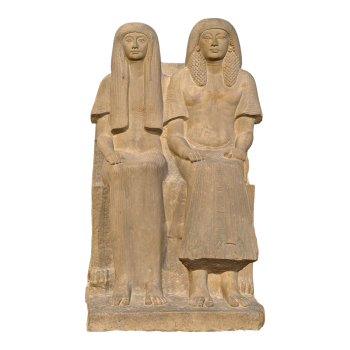
The limestone statues of Sakara and Melit from the New Kingdom period in ancient Egypt
The limestone statues of Sakara and Melit from the New Kingdom period in ancient Egypt

The statues of Maya and Melit are part of the collection of the National Museum of Antiquity in the Netherlands, which has owned three tomb statues of Maya and Melit since 1829. These statues come from the time of Pharaoh Tutankhamun and Hormukh, around 1325 BC. Sakara built a luxurious tomb for himself and his wife Melit, next to General Hormukhb's tomb, although General Hormukhb was never buried there. This statue is designed to receive food for ritual purposes and also serves as a dwelling for the souls of the deceased. This statue is made of limestone and dates back to the New Kingdom period, around 1295 BC.
The bronze statue of Apollo, the Sagittarius, from the ancient Roman period

The bronze statue of Apollo, the Sagittarius, from the ancient Roman period

This statue is part of the collection of Cardinal Giuliano della Rovere in the Roman palace. When he was elected as Pope Julius II (1503-1513), these statues were transferred to the Vatican and have been preserved there since at least 1508, now housed in the Vatican Museums. Apollo walked forward with great majesty, as if he had just released an arrow from the bow in his left hand. The date for this work has been determined to be mid February AD century and is believed to be a replica of the original bronze statue dating back to 330-320 BC.
Sebastian Slotz's "Annibal"

Sebastian Slotz's "Annibal"

The statue is "Annibal" created by Sebastian Slotz. This statue was made between 1687 and 1722. The height of the statue is 2.5 meters and the width is 1.068 meters. The inscription on the statue reads: 'Seb. Slodtz. Ficit. 1722'. This statue was placed in the Tuileries Garden in June 1722, opposite the statue of "Julius Caesar" by Nicolas Kustu. At this time, the statue was given a date. This statue entered the Louvre on June 5, 1872 and is still on display at the Louvre today.
The marble statue of the Lion King crushing the evil snake in Rittenhouse Square

The marble statue of the Lion King crushing the evil snake in Rittenhouse Square

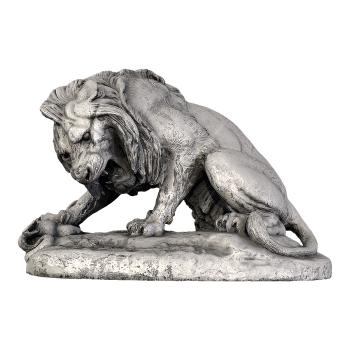
The sculpture is the first one installed in Rittenhouse Square, and the Lion King crushing the evil snake is a sculpture created by French Romantic sculptor Antoine Louis Barry, symbolizing the monarchy's lion suppressing the evil snake. This sculpture may be seen as a meaningful statement about social order: the lion here generally refers to the royal family, and more specifically, to the city of Lyon, as its emblem features a lion with an open mouth and a royal iris decoration below. The sculpture is now housed in the Smithsonian Museum of American Art in the United States.
The granite statue of Amenemhat III from the 12th Dynasty of Egypt

The granite statue of Amenemhat III from the 12th Dynasty of Egypt

The statue is a huge granite head of Amenemhat III, from the Bast Temple in Bubastis, Egypt. The statue was made around 1800 BC, during the 12th Dynasty of Egypt. His lips are full, and the oblique muscle under his lower lip shows tension in his jaw. His expression appeared serious, even harsh. The height of the statue is 83 centimeters, weighing about 1000 kilograms, with a width of 82 centimeters and a depth of 69 centimeters. The statue is now housed in the British Museum.
The marble bow statue of the British fifth class frigate 'The Old Father Thames'

The marble bow statue of the British fifth class frigate 'The Old Father Thames'

The statue is a cultural relic dating back to 1823, which was a five class frigate with 46 guns built at Chatham Shipbuilding. The statue is a carefully carved marble male half body, depicting an angry river god and undoubtedly representing the spirit of the Thames River. The statue is known as the 'Old Father Thames' and was taken from the fifth class frigate HMS Thames (1823). The Thames River is an important river that serves as the main trade route to the busiest port in London. It is an important shipbuilding center with royal docks and numerous private companies, and the statue is now housed in the National Maritime Museum in London.
The marble statue of the Nine Muses - Erato during the reign of Emperor Hadrian in ancient Greece

The marble statue of the Nine Muses - Erato during the reign of Emperor Hadrian in ancient Greece

Erato is one of the nine Muses in Greek mythology, and she is the goddess of inspiration for literature, science, and art. Erato is the muse of lyrical poetry, especially erotic poetry. In Orphic hymns, Erato is known for her visual charm. Since the Renaissance, she has been often depicted wearing a wreath of myrtle and roses, holding a harp or small harp, which is an instrument often associated with Apollo. This statue is made of marble and comes from Mount Calvo in the 2nd century AD. It is now collected at the Carlsberg Art Museum in Copenhagen, Denmark.